
Most medical websites in Georgia are invisible to Google. This is not an exaggeration or a marketing trick. We analyzed more than 20 clinics in Tbilisi, Batumi and Kutaisi, and the picture turned out to be systemic: for key queries, the top positions are held by aggregators such as Bookimed and PlacidWay, which take 15–25% of every patient. Clinics are paying for patients they could have received directly.
In this article we look at why this happens, what exactly isn’t working on Georgian clinic websites, and what steps are needed to change the situation. There are no promises of “top 1 in a week,” only specifics you can verify.
Why Medical Websites Need Specialized Marketing and SEO
What Is YMYL and Why It Applies to Your Clinic
Google sorts all websites into categories based on how much they can affect a user’s life. Medicine falls into the YMYL category, which stands for Your Money Your Life. Finance, legal services and news also belong here. These are websites where incorrect information can cost a person their health, money or safety.
For a clinic owner this means something simple: Google holds your website to a higher standard. What works for an online clothing store or a travel blog is not enough for a medical website. The algorithm is effectively asking: “Can this source be trusted when it comes to human health?”
According to Google’s official Search Quality Rater Guidelines, medical websites must demonstrate expertise, authoritativeness and trustworthiness. Without these signals, the chance of reaching high positions is minimal, no matter how much money is spent on advertising or content.
E-E-A-T: How Google Evaluates the Trustworthiness of Medical Content
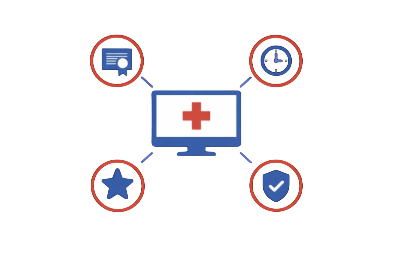
E-E-A-T stands for Experience, Expertise, Authoritativeness, Trustworthiness. Google uses these four parameters to judge how much trust a site deserves.
For a clinic, this comes down to specific questions:
Who is the author of the content on the site?
Do they have a medical education?
Are certificates, years of practice and specialization listed?
Does the site rely on verified sources, or does it simply repeat information from the internet?
The easiest way to understand E-E-A-T is an analogy. Imagine a patient walking into a doctor’s office. Diplomas, continuing-education certificates and letters of thanks hang on the wall. This builds trust before the conversation even starts. E-E-A-T works the same way, only for a search engine. If the “wall” is empty, Google won’t recommend that office.
How Medicine Differs from E-commerce and Tourism
Clinic owners sometimes compare their website to an online store or a travel agency site. The logic is understandable: in both cases you need to attract customers. But the mechanics are completely different.
Parameter | Medicine | Online store | Tourism |
Decision-making cycle | Weeks, sometimes months | Minutes, a few days at most | Days, weeks |
Content type | Expert, verifiable | Sales-oriented, comparative | Emotional, visual |
Google’s trust requirements | Maximum (YMYL) | Medium | Low |
Cost of a mistake for the user | Health | Money | Impressions |
Methods that work perfectly for selling curtains or tours are not suitable for a medical website. It needs a different architecture, different content and different trust signals.
Georgian Clinics: Specifics by Type
Dentistry: Why Competition Is Especially High Here
Dental tourism in Georgia is growing, and this is both an opportunity and a problem. An opportunity, because the flow of foreign patients is increasing. A problem, because aggregators have noticed this too and are actively taking over search engine positions. The average bill for an implant for a foreign patient is between €1,500 and €8,000. With an aggregator commission of 20–25%, the clinic loses between €300 and €2,000 on each patient. Multiply that by ten patients a month.
What distinguishes dental SEO:
Visual proof is essential. Patients want to see the result before they sit in the chair. Before/after galleries, procedure videos, photos of the clinic and equipment. Without them, conversion drops even if the site is technically flawless. There are also technical details. Every image needs alt text so Google can see it, and image sizes must be compressed, otherwise site speed will fall critically.
Price transparency is critical. A foreign patient compares your prices with those in their own country. If the site has no concrete figures, they go where those figures exist. Usually, that is an aggregator.
Every procedure deserves its own page. All-on-4, veneers, implantation, whitening. These are different queries, different user intents, different pages. A single general “Services” page doesn’t work.
Technical markup makes the difference. Schema markup of types such as DentalProcedure, Dentist and PriceSpecification allows Google to show rich snippets: prices, ratings and information about the doctor right in the search results. 95% of Georgian clinics don’t use it.
General Medicine, Aesthetics, IVF: What Are the Main Differences?
Although we have focused on dentistry here, the principles apply to every medical field. In our experience, however, there are nuances.
General medicine requires clear navigation by specialty. A patient is looking for a specific specialist or procedure, not “a clinic in general.” There is also an urgency factor: some patients are looking for help here and now, and the site must account for that.
Aesthetic medicine sells not a procedure but a result. Here the doctor’s personal brand is often more important than the clinic’s brand. The patient chooses a surgeon, not an institution. The doctor’s page, with a portfolio, testimonials and credentials, becomes the main landing page.
IVF is an emotionally charged subject. Patients are not buying a procedure, they are buying hope. Success statistics become the main argument, but they must be presented delicately. Confidentiality is critical: many patients don’t want to disclose that they are seeking treatment.
Clinic type | Main SEO priority | Critical markup | Core content type |
Dentistry | Procedure pages with prices | DentalProcedure, PriceSpecification | Before/after, prices |
General medicine | Navigation by specialty | Hospital, Physician | Guides, checklists |
Aesthetics | Doctor’s personal brand | Physician, Review | Portfolio, case studies |
IVF | Statistics and trust | MedicalOrganization, FAQPage | Statistics, Q&A |
What We Saw After Analyzing 20+ Clinics in Georgia
Technical Problems, and Why a Site Is Invisible Before We Start Working
The figures from the analysis turned out to be worse than expected.
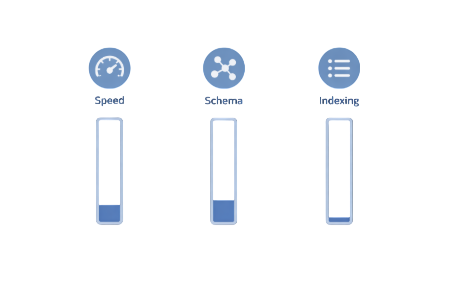
85% of clinics have critically slow load speed. Their LCP (Largest Contentful Paint) exceeds 5 seconds, while the norm is under 2.5 seconds. According to Google, pages that take more than 3 seconds to load lose 53% of mobile visitors. A person simply doesn’t wait for the site to open and goes to a competitor. Or to an aggregator that invests in speed.
95% have no schema markup. This means Google sees the site as an unstructured mass of text. No rich snippets in search results, no additional information about prices, doctors or ratings. The site becomes “invisible” next to those that have implemented markup.
60% have errors in robots.txt or sitemap.xml. These are the key files that tell a search engine what to index and how. Errors here mean that some pages never make it into Google’s index at all, or that unnecessary technical pages get indexed and only confuse the search engine.
80% have multilingual problems. Either hreflang is missing or it is configured incorrectly. The result: the Russian and English versions of the site compete with each other instead of working for different audiences.
Why Google Might Consider a Site Dead
[Image: red window on a heartbeat-shaped line against a black background; minimalist design, technical mood]
70% of clinics have no active blog. Either there is no blog at all, or the last article was published two years ago. To Google, this is a signal: the site has been abandoned and its information may be outdated.
60% of doctors have no full profile pages. There is a list of names, maybe photos. But no education, certificates, years of practice or specialization. These are exactly the E-E-A-T signals discussed above, and they are missing.
Almost no one uses FAQs. Structured answers to patients’ questions benefit both the visitor and the search engine. They are also a direct route to answers from neural networks, which we’ll discuss later.
Checklist: Check Your Website in 5 Minutes
Here is what you can check right now, with no specialized knowledge:
Open PageSpeed Insights (pagespeed.web.dev) and enter your site’s address. A Performance score below 50 pushes your site into invisible territory.
Open the Google Rich Results Test (search.google.com/test/rich-results) and test your home page. If no markup is detected, your site is “invisible” for rich results.
Type site:yourwebsite.com into Google and count the indexed pages. If that number is lower than the number of pages that actually exist on your site, you have an indexing problem.
Make sure you have a separate page for each key procedure. A single “Services” page with a list means lost traffic.
Open any doctor’s page. Is there education, certificates, years of practice, a photo? If there is only a name and a job title, E-E-A-T signals are absent.
Look at your blog. When was the last post? If more than 6 months ago, the site looks abandoned.
Switch the site language to English (if available). Did the URL change? If not, hreflang is probably not configured.
If three or more items show problems, the site is systematically unoptimized. This is not a verdict, it is a diagnosis. And it is curable.
Artificial Intelligence Is Changing Search Engines
How to Get Into the Recommendations of GPT and Other Neural Networks
Why AI Systems Are Even Stricter About Medical Content
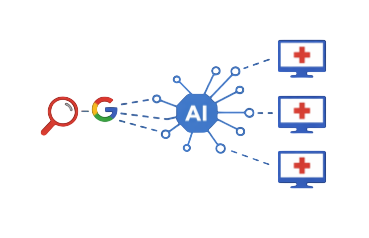
Search is changing. More and more people ask their questions not to Google but to ChatGPT, Perplexity and Google SGE (Search Generative Experience). According to Gartner analysts, in 2026 AI systems will handle 25% of search queries.
For medicine this is especially important. Imagine a patient asking ChatGPT: “best dental clinic in Georgia for implants.” The neural network forms its answer from the data it considers reliable. If your site doesn’t look like an authoritative source, you definitely won’t be in that answer.
AI systems are even more cautious than Google when it comes to health. They fear liability for medical recommendations. So they prefer to cite “official” sources: sites with clear structure, verified expertise and structured data.
What AI Needs in Order to Recommend Your Clinic
Three key factors:
Structured data. FAQ sections, clear answers to specific questions, Schema markup. AI effectively “pulls” information from such blocks and uses it in its answers.
Citable wording. If your site says “We offer quality services at affordable prices,” that won’t be cited. If it says “At our clinic, a single-tooth implant costs between €800 and €1,200, crown included,” that is specific information AI can use.
Source authority. Mentions of the clinic on other sites, links, publications in medical media. The larger the “digital footprint,” the higher the AI’s trust in the source.
How This Works in Practice
What You Can See in the First 1–3 Months
SEO is not advertising, where results are visible the day after launch. But that doesn’t mean nothing happens in the first three months.
During this period, technical problems are resolved: load speed, indexing, markup, site structure. This is the foundation, without which further work is pointless. In parallel, analytics is configured, and you begin to understand where visitors come from, what they do on the site and where they go.
The first changes in positions are usually noticeable for low-frequency queries. These are long, specific phrases such as “how much does a dental implant with anesthesia cost in Tbilisi.” Competition for them is low, and the site starts receiving its first organic traffic. SEO has a huge advantage over advertising: when everything is done, clients don’t run out, they start coming. Every month SEO brings more and more clients, and the cost of acquiring one client becomes far more favorable than with advertising.
What’s on the Horizon in 4–6 Months
Most of the sites we studied have huge problems with load speed, broken links and other errors, which essentially “switch off” the site and make it non-functional. Fixing these errors yields results within a month. The site becomes genuinely visible and starts working. But this is only the foundation, without which truly significant results are impossible.
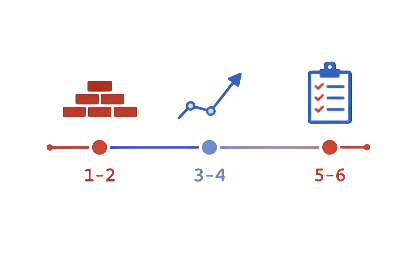
This is where growth for target queries begins. Top 10 for 3–5 key queries in 5–6 months! This is a realistic benchmark for a clinic with an average level of competition. Not a guarantee, but a benchmark based on practice.
The first organic leads appear. Patients find your clinic through Google rather than through an aggregator. This is a measurable result: you can count how many leads came in, from which queries, and what their average bill is. And how much you saved by not having to pay a percentage to aggregators.
Dependence on aggregators begins to decline. Not to zero, since aggregators remain a channel, but their share of the overall flow shrinks.
Why SEO Is More Profitable Than Aggregators in the Long Run
An aggregator rents out patients rather than handing them over. You pay on every one, and you pay continuously. Stop paying and the flow stops.
SEO, on the other hand, is an investment in your own asset. A site in the top 10 keeps attracting patients with no monthly fee on each of them.
Let’s work through an example. An implant bill is €3,000. The aggregator commission is 25%, or €750 per patient. Ten patients a month through an aggregator means €7,500 in commission. Over a year, that is €90,000.
Working with Signum Marketing, SEO investment can be between €8,000 and €15,000 per year, depending on the package. If it brings in at least 2–3 patients directly each month, it pays for itself. Everything above that is a direct increase in your revenue. Saving on commissions and growing profitability, along with stability and independence, can be a very sensible decision.
At the same time, the site remains yours. Content, positions and reputation are fixed and accumulate. They keep working for you even if you decide to change contractors or hire your own SEO specialist.
On Expertise and Authorship: Why It Matters to Google and Isn’t Hard for You
Google wants to know who stands behind the content on a medical website. This is part of E-E-A-T, which we discussed above. But to a clinic owner it sounds like extra work: “Now I have to write articles myself?”
No. Content can be created by a copywriter or an agency. But it must be signed off by the doctor, or by the clinic as an organization. And the site must contain information that confirms expertise: doctor pages with education, certificates and work experience.
What is actually required of the doctor: 15–20 minutes to check the facts in a ready text, and updated information about themselves for a page on the website. This is not writing articles. It is verification. It’s like signing a medical document: you don’t write the record yourself, but you confirm its authenticity.
For the clinic, this means collecting information about each doctor once (education, certificates, photo, specialization). We will build full pages on the website, and after that they work as a permanent E-E-A-T signal for Google.
FAQ
How much does SEO for a clinic cost?
It depends on the scope of work and the goals. For a small clinic, the basic package starts at $690 per month. For clinics with aggressive growth targets and several languages, up to $1,300.
When will I see the first results?
Technical improvements (speed, indexing) are noticeable in the first weeks. Position growth for target queries comes in 3–4 months. A steady flow of organic leads comes in 4–6 months. SEO is a marathon, not a sprint. But the results are stable and lasting.
How are you different from an ordinary agency?
We work only with the medical sector. Signum Marketing is not a universal SEO agency that promotes a pizzeria today and a clinic tomorrow. We understand YMYL, E-E-A-T, medical content and the specifics of the Georgian market.
Will this help attract foreign patients?
Yes, we consider medical tourism one of the main priorities. We set up the site so that patients from Europe or neighboring countries find you before the intermediaries do. In addition, when promoting sites in foreign markets, we have learned to account for the specifics of different countries and apply them profitably to Georgian markets. For example, texts, search queries, and meta and alt texts for European and Arab markets are radically different.
Do I have to write the content myself?
No. We create the content. All we need from you is verification of the medical facts (15–20 minutes per article) and updated information about doctors for the pages on the site.
What if I already have a marketer or an agency?
We can work alongside your team or take over the SEO function entirely. We start with an audit to understand the current state and avoid duplicating work.
Still have questions? Write in the comments!
What Makes SIGNUM Marketing Unique
The only agency in Georgia specializing in SEO for the medical sector. We help clinics receive patients directly from Google, without paying commissions to aggregators. We look forward to hearing from you! The initial SEO analysis and consultation are free.
Other materials: — Medical SEO Pack by Signum, Solutions