
Professional healthcare marketing starts a positive cycle. Competition for patients encourages transparency, investment and standardization, which ultimately improves the quality of medical care for everyone. Research from the British NHS, from emerging markets and from leading medical tourism hubs shows the same thing: when clinics compete for informed patients, mortality falls, the number of accredited institutions grows and clinical outcomes improve. These findings matter for emerging markets such as Georgia, which are trying to raise the level of their healthcare systems by developing medical tourism.
Academic Research Confirms: Competition Improves Treatment Outcomes
The foundational evidence comes from large-scale health economics studies. A paper by Gaynor, Moreno-Serra and Propper (2013), published in the American Economic Journal, analyzed NHS reforms that gave patients freedom of choice under fixed prices. The result: hospitals in competitive markets showed a significant reduction in mortality, estimated at 3,354 life-years saved each year, worth £227 million, and the quality gains came without any increase in costs. Cooper and co-authors (2011) confirmed these findings in The Economic Journal: after the reforms took effect, mortality from heart attacks fell faster by 0.31 percentage points per year in competitive markets.
The key conclusion of the research is that competition improves quality when prices are fixed and patients have access to information about quality. Under price competition, where hospitals compete on cost, the NHS internal market of the 1990s actually showed higher mortality in competitive areas. But when prices were regulated and clinics competed on quality alone, outcomes improved sharply. This has deep implications for medical tourism markets, where international price benchmarks effectively create “fixed-price” competition focused on quality differentiation.
Recent research extends these findings globally. A 2024 Chinese study published in Health Economics Review, covering 406,664 outpatients, found that for every 1% increase in competition between hospitals, the risk of patient readmission (a quality indicator) fell by 34.9%. The effect was strongest in accredited clinics, which shows that competitive advantages are reinforced through quality signals. Similarly, a working paper by Kepler and co-authors (2023) for the US Federal Trade Commission showed that quality transparency in the dialysis market increased the entry of new providers near low-quality facilities by 27%, forcing the latter to improve or lose patients.

Accreditation as a Quality Catalyst: The JCI Effect
Joint Commission International accreditation has become the global gold standard for quality signaling in healthcare and has produced measurable improvements wherever it has spread. A 2015 study in Abu Dhabi (Devkaran and O’Farrell, BMC Health Services Research) followed a hospital through the accreditation process and found that 74% of quality indicators improved significantly during preparation. The improvement held at 90% three years later, a sustained gain of 20 percentage points above baseline.
The spread of JCI accreditation tells its own story of competition for quality. From roughly 350 accredited institutions in 2007, JCI grew to more than 1,000 accredited organizations in over 70 countries. In the Asia-Pacific region and the Middle East alone, the number of JCI-accredited institutions has doubled since 2020. Thailand leads Southeast Asia with 62 JCI-accredited institutions. India grew from 1 JCI hospital in 2005 to 57–61 institutions by 2025. Turkey has 46–50+ JCI hospitals, placing it among the world’s top three.
This expansion of accreditation correlates directly with marketing competition in medical tourism. When Bumrungrad International Hospital became the first Asian hospital to receive JCI accreditation in 2002, it set a competitive benchmark that transformed Thailand’s entire healthcare sector. Competing clinics invested in quality systems to match Bumrungrad’s marketing advantage, creating industry-wide improvement.
Turkey Transforms Domestic Healthcare Through International Competition
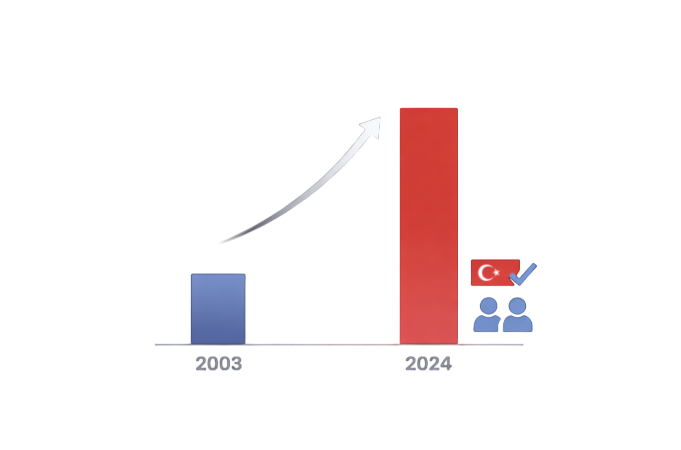
The growth of medical tourism in Turkey, from $203 million in healthcare revenue (2003) to $3.02 billion (2024), is a compelling natural experiment in how competition for international patients raises domestic standards. Patient satisfaction in Turkey rose from 39.5% in 2003 to 75.9% in 2011, following healthcare reforms that coincided with the development of medical tourism. That is a near doubling of satisfaction in less than a decade.
The mechanism is visible in the evolution of Turkey’s hospital infrastructure. Memorial Şişli Hospital became the first Turkish JCI-accredited institution in 2002, the 21st hospital in the world to receive this certification. This marketing differentiator triggered a competitive response across the sector. Today, major networks including Acibadem (21 hospitals, 50,000+ international patients annually), Memorial Healthcare, MedicalPark (28 JCI-accredited hospitals serving 6 million patients) and LIV Hospital Group maintain international accreditations and compete on quality indicators.
The Turkish government institutionalized quality standards through USHAŞ (International Health Services Inc.), which manages the “HealthTürkiye” brand and requires participating hospitals to meet international standards. New regulations in 2025 mandate complications insurance for all medical tourists and 24-hour multilingual call centers, standards that benefit all patients regardless of origin. More than 750 public and private hospitals now hold medical tourism authorization certificates, a comprehensive raising of both administrative and clinical standards.
Technology diffusion clearly illustrates the spillover effect. Turkish hospitals competing for international patients invested in modern equipment, including Da Vinci robotic systems, CyberKnife, and Flash CT scanners with 80% less radiation, which equally serve domestic patients. Competition also encouraged investment in human capital: Turkey now graduates roughly 8,000 doctors a year, many of whom have received international training.
Thailand’s Medical Hub Status Lifted All Boats
Thailand’s transformation into Asia’s leading medical hub began with a crisis. The 1997 Asian financial crisis forced private hospitals with 11,300 beds (30% of all hospital beds in the country) to seek international patients in order to survive. This market pressure created an incentive for quality differentiation that permanently raised Thai healthcare standards.
From 120,000 international patients in 1997, Thailand grew to serve more than 3 million medical tourists a year by the late 2010s, and captured 24.4% of the global medical tourism market in 2024. Critically, a study in the WHO Bulletin showed that hospital managers and service providers reported no difference in the core aspects of clinical care between foreign and local patients. The same medical protocols apply to everyone, and differences exist only in peripheral services such as translation and airport transfers.
Bumrungrad International Hospital embodies the quality-through-competition model. It now serves 600,000 patients a year from 190 countries, with about 200 US-board-certified doctors among its 900 physicians, and it set standards that competitors were forced to meet. Bangkok Dusit Medical Services (BDMS) grew into Thailand’s largest operator with 58 hospitals and 8,400+ beds, including 11 JCI-accredited facilities. Competitive dynamics forced continuous investment in quality systems.
State policy reinforced these market dynamics. Thailand’s 20-year National Strategy (2017–2036) defines medical tourism as a priority industry, while between 2001 and 2011 the government doubled per capita universal healthcare funding from 1,202 to 2,546 baht. Competitive pressure from private institutions serving international patients created political pressure to improve the public sector, a spillover effect that benefits Thailand’s entire population.
South Korea and India Show the Convergence of Marketing and Quality
The K-beauty phenomenon and South Korean medical tourism show how marketing creates accountability for quality. The country ranks first in the world in plastic surgery procedures per capita and holds 25% of the international cosmetic surgery market. From 27,400 foreign patients in 2008 to almost 1.2 million in 2024, the growth of Korean medical tourism was driven by deliberate marketing that leveraged the cultural export of “Hallyu” (the Korean Wave).
This marketing success had to be backed by quality. Major Korean hospitals invested actively in clinical excellence: Asan Medical Center performs 45% of heart transplants in South Korea with a 90% success rate, and Samsung Medical Center ranks 15th in Newsweek’s “World’s Best Smart Hospitals 2026.” The government founded the Korea Health Industry Development Institute (KHIDI) in 1999 and in 2013 created the world’s first national licensing system for international medical coordinators, institutionalizing quality standards for services being sold.
Critically, Korean hospitals emphasize advanced medical technology rather than low prices in their marketing, in order to counter suspicions of low quality. This positioning requires continuous technology investment, including Da Vinci robotic systems, proton therapy centers and complex organ transplantation programs, which benefit all patients. Seventeen Korean hospitals made Newsweek’s 2026 global smart hospitals ranking, more than any other Asian country.
India’s corporate hospital networks show how marketing through accreditation transformed a developing healthcare system. Apollo Hospitals, founded in 1983 as India’s first corporate hospital, became a pioneer of clinical benchmarking with its ACE assessment system (2005) and the first Indian hospital to publish outcomes data (2009). The marketing advantage of transparent quality indicators, such as a 90% liver transplant success rate and a 99.6% success rate for coronary artery bypass grafting, pushed competitors, including Fortis, Max Healthcare and Narayana Health, to raise their own standards.
The rapid growth of accreditation in India quantifies this competitive effect: from 1 JCI hospital in 2005 to 57–61 JCI facilities and 4,650+ NABH hospitals by 2025. The government’s “Heal in India” campaign now promotes five regional medical tourism hubs through public-private partnerships, and hospital stocks rose 4–7% after the Union Budget 2026 announcement. The Apollo network alone has treated 150+ million patients from 150+ countries and performed 25,000+ organ transplants with outcomes comparable to those of Cleveland Clinic and Mayo Clinic.
How Marketing Mechanisms Translate into Quality Improvement
Research reveals five interconnected mechanisms through which professional marketing stimulates healthcare quality:
1. Transparency effects reduce information asymmetry between providers and patients. A Stanford GSB study showed that transparency caused low-quality facilities to lose 31% of their referrals (equivalent to $3.74 million in lost annual revenue), while a study of German hospitals showed that public reporting had uniformly positive effects on quality competition. When 87% of patients read reviews before choosing a provider and 72% demand a 4+ star rating, transparency creates constant pressure to improve.
2. Competitive dynamics create an incentive for a “race to the top” when patients can see quality differences. A 2025 study in Frontiers in Public Health showed that competition in China’s healthcare sector improved both technical quality (medical treatment, prescribing, waiting times) and non-technical quality (doctor’s attitude, price transparency). The effects are strongest under price regulation, when institutions cannot compete by cutting costs, which is exactly the situation in international medical tourism, where price benchmarks are already set.
3. Reputation and signaling mechanisms make quality investments visible to patients. JCI accreditation functions both as a quality improvement tool and as a marketing signal, creating alignment between marketing goals and clinical excellence. A Gallup study estimates that engaged physicians generate roughly $500,000 in additional annual revenue through referrals, which makes investment in staff quality economically rational.
4. Investment effects justify quality spending through marketing ROI. Technology adoption accelerates when institutions compete for informed patients: 63% of healthcare organizations now actively use artificial intelligence, partly because of competitive pressure and patient expectations. The investment-quality cycle becomes self-reinforcing, because marketing success generates the resources for further improvement.
5. Standardization effects spread best practice across the whole system. When international patients demand JCI-level protocols, those protocols become the standard for all patients. The improvements in documentation requirements, communication standards and care coordination made for international patients equally benefit the local population.
Georgia Stands at a Crossroads of Opportunity
Georgia’s healthcare sector has characteristics that are ideal for quality improvement driven by marketing. With 86% of hospitals privately owned, one of the highest privatization rates in the world, market incentives already dominate the system. Existing medical tourism segments show competitive pricing and specialized expertise. They include fertility treatment (IVF costs $4,000–$6,000, versus $10,000–$15,000 in Western Europe), dentistry (implants at €700–1,500, versus €3,000+ in the UK) and hair transplantation.
However, the volume of medical tourism in Georgia remains modest, about 1,500 medical tourists in 2017, compared with Turkey’s 1.5+ million or Thailand’s 3+ million. This gap is both a challenge and an opportunity. American Hospital Tbilisi was the first in Georgia to receive JCI accreditation, showing that international quality standards are achievable. The Evex hospital network (35 facilities) operates to JCI standards, which indicates readiness for formal accreditation.
The research data point to clear paths of development. Countries that created coordinated national branding (Turkey’s HealthTürkiye, Thai initiatives, Singapore’s SingaporeMedicine, Malaysia’s MHTC) achieved faster growth and quality improvement than where marketing efforts were fragmented. Georgia’s geographic position at the crossroads of Europe and Asia, its price competitiveness (50–70% savings compared with Western Europe) and its regulatory advantages (especially in reproductive medicine) provide a marketing foundation.
Professional marketing agencies can catalyze this development by creating transparency and competitive dynamics that drive quality improvement. When international patients’ expectations meet professional marketing capabilities, research predicts an acceleration of accreditation, technology investment and outcome improvement. This mechanism is not abstract theory but a proven reality in Turkey, Thailand, South Korea, India and Israel.
Signum Marketing’s Mission: A Catalyst for the New Stage of Georgian Medicine
The data presented create the context in which Signum Marketing operates. We see our role not simply as an SEO agency but as a participant in the systemic transformation of the Georgian medical sector.
Our mission is to free Georgian clinics from dependence on aggregators and to build a direct channel for attracting patients, one that increases clinics’ visibility while encouraging their quality growth.
Why does this matter? When a clinic comes into direct contact with an international patient through Google, it takes full responsibility for the outcome. There is no intermediary to receive the complaint. There is no aggregator to hide a negative review. There is only the clinic’s reputation, its doctors and their work. This pressure is healthy pressure that, as research shows, improves quality.
Where We Are Heading
Building transparency infrastructure. We implement the E-E-A-T standards that Google requires for medical content, which at the same time require clinics to document doctors’ expertise, publish real results and answer patients’ questions. This is not just SEO optimization. It is building a culture of openness.
Preparing for the era of AI recommendations. ChatGPT, Perplexity and Google SGE increasingly answer questions like “where to get dental treatment in Georgia.” We organize clinics’ data so that neural networks perceive them as authoritative sources. This is a new front of competition, and Georgia may occupy it before its competitors do.
Shaping industry standards. Our work with clinics creates precedents: what a doctor’s page should look like, what data to publish, how to respond to reviews. These practices spread across the market and raise the overall level.
Why Partnering with Us Is the Right Decision
Turkey began its path to $3 billion in medical tourism with a few clinics that were the first to obtain JCI accreditation and build international marketing. Thailand transformed when Bumrungrad set a standard that the rest were forced to match.
Georgia is at the beginning of this path. The clinics that invest in professional quality marketing now will become the ones who define industry standards over the next decade. We offer not just a service but a partnership in building a system that will benefit both your clinic and Georgian medicine as a whole.
The research is unambiguous: quality-oriented professional marketing improves healthcare. The only question is who will lead this transformation in Georgia.
Key Statistics
Indicator | Result | Source |
Lives saved through competition | 3,354 life-years per year (NHS) | Gaynor et al., 2013 |
Quality improvement during JCI preparation | Indicators improved by 74% | Devkaran & O’Farrell, 2015 |
Patient satisfaction growth (Turkey) | 39.5% → 75.9% (2003–2011) | Turkish healthcare statistics |
JCI-accredited hospitals worldwide | 1,000+ in 70+ countries | JCI, 2024 |
JCI growth in India | 1 (2005) → 57–61 (2025) | Industry data |
Thailand’s share of the global market | 24.4% | Global market reviews, 2024 |
Effect of competition on quality | 34.9% better outcomes per 1% increase in competition | Health Economics Review, 2024 |
Effect of reviews on patient choice | 87% read reviews; 72% demand 4+ stars | Birdeye, 2025 |
Georgia’s advantage | Prices 50–70% lower than in Western Europe | Industry research |
What This Means for Your Clinic
The figures and cases in this article describe not abstract processes but a concrete path that thousands of clinics in Turkey, Thailand and South Korea have already walked: from dependence on intermediaries to direct contact with the patient, and from invisibility on Google to positions that create a steady flow of calls.
Georgia today is where Turkey was in the early 2000s: a strong medical base and competitive prices, but weak digital infrastructure for attracting international patients. The difference is that Georgian clinics have the chance to learn from others’ mistakes and travel this path faster. We analyzed in detail why Georgian clinics lose to aggregators on Google and how that can be changed, which technical and content problems keep Georgian sites from competing with aggregators, and what needs to be done about it.
If you are ready to move from theory to practice, start by exploring our flagship product, the Signum Medical SEO Pack. It is a comprehensive solution we developed specifically for Georgia’s medical sector, from technical optimization to E-E-A-T content and preparing your site for neural network recommendations. The full list of our services and rates is available in the Services section.
The research shows that clinics that are the first to invest in quality marketing will define industry standards for years. The question is not whether Georgia’s medical tourism market will change. The question is whether you will be among those who change it.
Signum Marketing is the only agency in Georgia specializing in SEO and digital marketing for the medical sector. We help clinics receive patients directly from Google, without paying commissions to aggregators.

Get a free SEO check of your website